💭 Simpler Recycling 2026: what councils need to know

.webp)
Simpler Recycling is live: what local authorities need to know
As of 31 March 2026, England's Simpler Recycling rules are officially in effect for households. For local authorities, that means a new national standard for how waste and recycling is collected from every home in your area — and a significant shift in how you communicate with residents.
Here's what the policy covers, what it's designed to achieve, and how digital tools can help your team stay compliant without adding to the workload.
What is Simpler Recycling?
Simpler Recycling is a UK government reform introduced under the Environment Act 2021. Its goal is to end the so-called "postcode lottery" of bin collections — where recycling rules varied wildly from one council to the next — and replace it with a consistent, standardised system across England.
Under the new rules, waste collectors must now offer households four separate collection streams by default:
- Food and garden waste (food waste collected weekly)
- Paper and card
- Other dry recyclables — glass, metal, and plastic, including cartons
- Residual waste — non-recyclable rubbish sent to landfill or energy recovery
Local authorities do have some flexibility. Paper and card can be co-collected with other dry recyclables where collecting them separately isn't technically or economically practical. But the core framework is now standardised nationwide.
This household phase follows the business phase that went live in March 2025, which required all organisations with 10 or more employees to separate their waste into the same core streams. Micro-firms with fewer than 10 employees have until March 2027 to comply.
What is the policy trying to achieve?
The short answer: higher recycling rates, less contamination, and less waste going to landfill.
England's household recycling rate has barely moved in years. The most recent provisional DEFRA data puts it at 44.0% in 2023 — essentially unchanged from 2021. A major driver of that stagnation is confusion. When every council runs different rules, residents don't know what goes where, and contamination creeps in. According to WRAP, 85% of UK households put one or more non-accepted items into their recycling. Simpler Recycling tackles that head-on by giving everyone the same set of rules to follow, regardless of where they live.
.webp)
The government's targets are ambitious. Alongside Extended Producer Responsibility (EPR) for packaging and the Deposit Return Scheme launching in October 2027, Simpler Recycling is designed to help England reach a 65% municipal recycling rate by 2035, with projected greenhouse gas savings equivalent to £11.8 billion.
For local authorities specifically, the expected outcomes include reduced contamination rates across collection streams, higher-quality recyclable material that can be reprocessed domestically, and fewer resident queries caused by unclear or inconsistent guidance.
More than £340 million has been allocated to help councils prepare for these changes, including the rollout of weekly food waste collections — a first for many areas.
The real challenge: resident communication
The policy itself is straightforward. The harder part is making sure residents actually understand and follow the new rules — especially in areas where collections are changing significantly.
If your council is introducing food waste collections for the first time, switching from weekly to fortnightly general waste, or reorganising bin colours and streams, you'll need clear, consistent communication that reaches every household. That includes people who don't speak English as a first language, people who've just moved into the area, and people who've been recycling differently for years.
This is where confusion becomes contamination. And contamination is expensive — it increases processing costs, reduces the value of recyclable material, and undermines the diversion rates the policy is designed to improve. As we explored in our post on proven waste disposal communication strategies, the average person faces over 50 disposal decisions a week. When the rules change, those decisions get even harder unless the guidance is immediate, specific, and easy to access.
Getting this right isn't just about compliance — it's about building effective waste programmes that actually reduce contamination at source, rather than relying on costly sorting further downstream.
How Scrapp can help local authorities stay compliant
Scrapp® builds digital tools designed to help municipalities communicate waste and recycling rules clearly — and track the data that proves it's working.
Two features are especially relevant to the Simpler Recycling rollout:
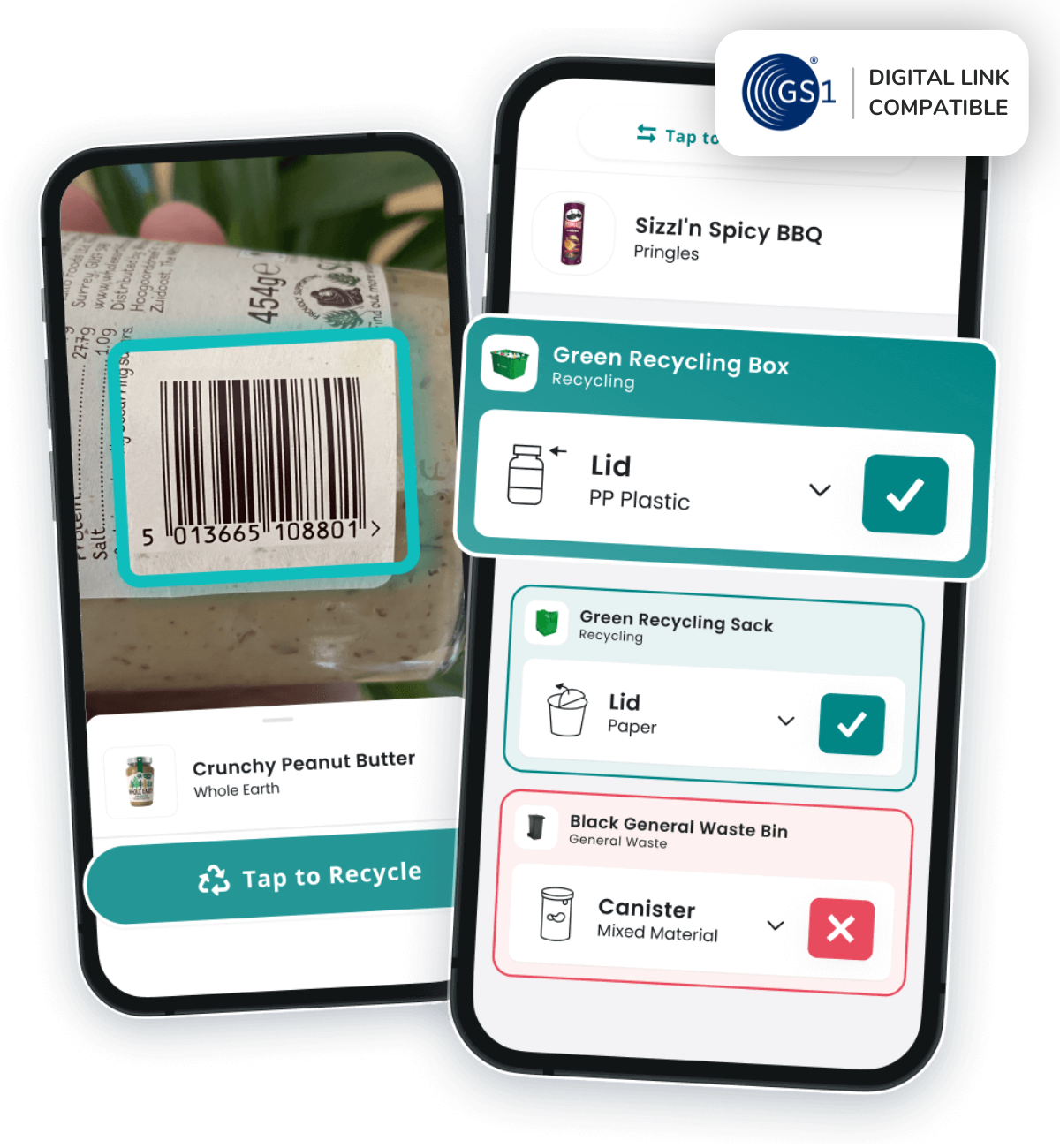
Barcode scanning and AI-powered search. Residents can scan any product barcode or search by item name and get instant, location-specific disposal guidance. No more guessing, no more outdated leaflets. This is particularly useful during a transition period, when people are adjusting to new streams and need a reliable answer at the point of disposal. It reduces confusion at the bin, which directly reduces contamination in your collection streams.
Scrapp works beyond just household waste, while the residential bins are getting more streamlined, it doesn't account for bulky waste types like mattresses, e-waste or furniture - all big culprits for illegal fly tipping. Paired with our Maps feature, residents can discover where to dispose of many of the waste items that do not fit in your household bin.
Multilingual accessibility. Scrapp supports 20 languages, which means your waste guidance reaches residents who might otherwise be excluded from traditional communication channels. For councils serving diverse communities, this isn't a nice-to-have — it's essential for equitable compliance. If residents can't understand the rules, they can't follow them.
These tools sit alongside Scrapp's broader platform for municipalities, which includes white-label options, collection reminders, and resident engagement features — all designed to help local authorities run more effective waste programmes without overstretching internal resources.
The principle is simple: you can't manage what you can't measure. If you're looking for a deeper dive into how tracking waste data can transform programme performance and cut costs, our guide to waste accounting lays out the fundamentals. And if you're building or refreshing your recycling programme alongside these new requirements, our 11 best practices for creating a recycling program is worth a read.
What happens next?
Simpler Recycling doesn't end here. The next milestone is March 2027, when micro-firms must comply and plastic film collections become mandatory for households. Councils should already be planning for how to incorporate those changes — and how to communicate them to residents before the deadline hits.
The authorities that will manage this transition most smoothly are the ones investing now in digital infrastructure that can scale. Rules will keep evolving. Having a flexible, data-driven communication tool means you won't be starting from scratch every time.