🧇 004 Part 3 Waste Waffle: How the Waste Sausage is made

The virgin price floor: why a conflict in the Strait of Hormuz is a recycling story
Brent crude oil is hovering at around $95 per barrel. That is a recycling story. Every recycled material — plastics, metals, paper, glass, fibre — competes against a virgin price floor tethered to the cost of oil and natural gas. When that floor shifts, recycling economics shift with it. The Strait of Hormuz conflict has made something visible that was always true.
What does the Strait of Hormuz have to do with your recycling programme?
More than most sustainability managers realise.
The Strait has been closed since early June. US-Iran clashes are ongoing, and as of the time of recording, no deal had been reached. Brent crude is hovering around $95 per barrel — consolidating in an $86 to $95 band, roughly 20% below its March peak but around 36% above where it was a year ago at $70 per barrel.
The exact price matters less than the volatility. A stable 20% increase is one thing. A market that changes by the hour, with plastic refineries and polymer facilities being struck in the conflict, is another.
Here is the structural point: every recycled material has to compete against a virgin equivalent. That virgin equivalent is priced partly off oil and natural gas, which are used heavily in the production of plastics, metals, paper, glass, and fibre. This includes the dies used in packaging. When oil moves, the price floor for every recycled material competes against it. As crude climbs, recycled content becomes more cost-competitive — not because recycling improved, but because virgin got more expensive.
What is actually happening to recycled material prices right now?
The US and EU are experiencing the same shock with opposite outcomes — and the gap is instructive.
In Europe, recycled PET still trades above virgin at roughly an 11% premium as of early June. That premium is lower than usual; it briefly dipped below virgin at the peak of the oil spike, but recycled remains the more expensive, sought-after option. At Brent crude around $110 to $120 per barrel, virgin would flip to being more expensive than recycled in the EU.
In the US, recycled PET bales collapsed to approximately 2.8 cents per pound in early June, down from around 16 cents per pound in early 2025. At the spring low, some bales went negative; sellers were paying buyers to take the material (Waste Waffle 004, June 2025). Multiple material recycling facility and processing facility closures were recorded earlier in 2025.
Polypropylene and HDPE bales spiked and then eased; a whipsaw with no clean trend.
Why are EU and US recycled markets responding so differently?
It is not a material problem. It is a demand problem — this episode described it as a plumbing issue.
The EU has regulatory demand pull. Mandates for recycled content inclusion in packaging are converting into actual purchasing decisions. The US does not have equivalent federal mandates at scale. Without a policy mechanism forcing brands to buy recycled content, demand is discretionary — and when margins tighten, discretionary purchasing gets cut.
The result: the same global oil shock produces a premium market in Europe and a collapsing bale market in the United States. Same material. Same conflict. Different policy infrastructure.
Why is the aluminium disruption harder to reverse than the oil price?
The naval blockade has idled roughly 9% of global aluminium supply. Aluminium was sitting at around $3,600 per ton as of early June, off a four-year high of approximately $3,855 per ton.
The difference between aluminium and oil is the recovery timeline. When the Strait reopens, oil prices respond within days. A damaged aluminium smelter takes approximately 12 months to return to full operation (Waste Waffle 004, June 2025). The supply disruption does not reverse when the conflict ends — it reverses on a manufacturing timeline. That is a different kind of exposure for any programme relying on metal recovery as part of its economics.
What does this mean for sustainability managers?
Two things.
First, your recycling programme's economics are partly determined by forces that have nothing to do with what you put in the bins. The virgin price floor is structural. It moves with oil, with geopolitics, with manufacturing capacity. Knowing which materials in your waste stream are most exposed to that floor — and which have policy-driven demand behind them — is part of managing the cost and risk of your programme.
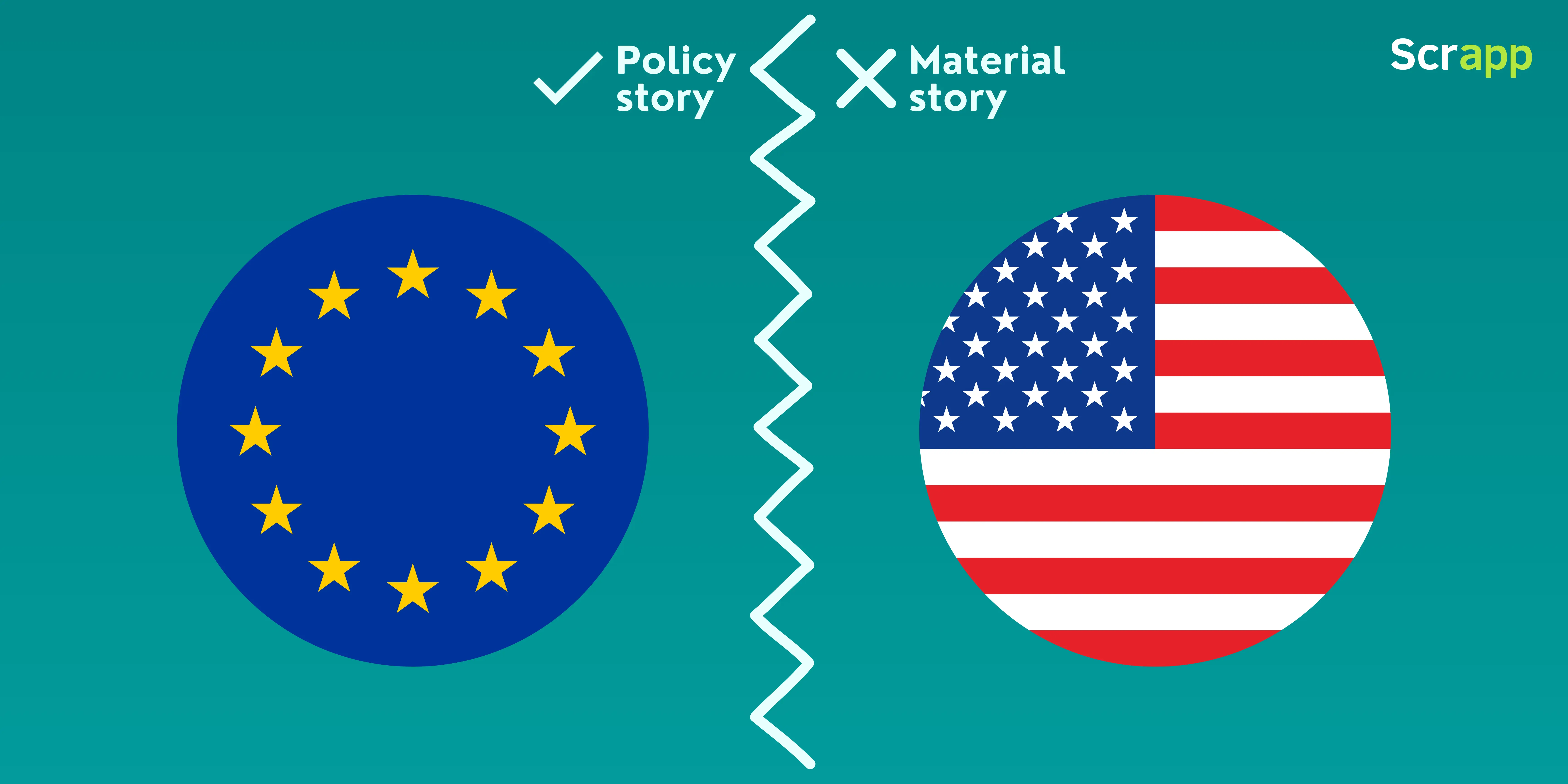
Second, the EU-US split is a policy story, not a material story. Where recycled content mandates exist, recycled markets hold. Where they don't, markets are fragile. EPR legislation and recycled content requirements are not abstract sustainability goals — they are the demand infrastructure that determines whether the material you divert has somewhere to go.
For sustainability managers tracking this, our reports library covers the policy and market research behind these trends. And if you want to see how leading programmes are managing material-level cost and risk in practice, explore Scrapp® customer outcomes in our case studies library.
Next week: we go further upstream — into product design and why 80% of a material's fate is locked in before it ever reaches a collection point.