🧇 002 Part 1 Waste Waffle: How the Waste Sausage made

The US recycling rate sits somewhere between 5% and 32%, depending on whose numbers you trust — and that gap isn't a rounding error. The recycling system wasn't designed for today's waste stream. Waste haulers are passive receivers: they process whatever arrives, with no control over what consumers and brands put into the world.
That's the starting point for building a waste program that actually works.
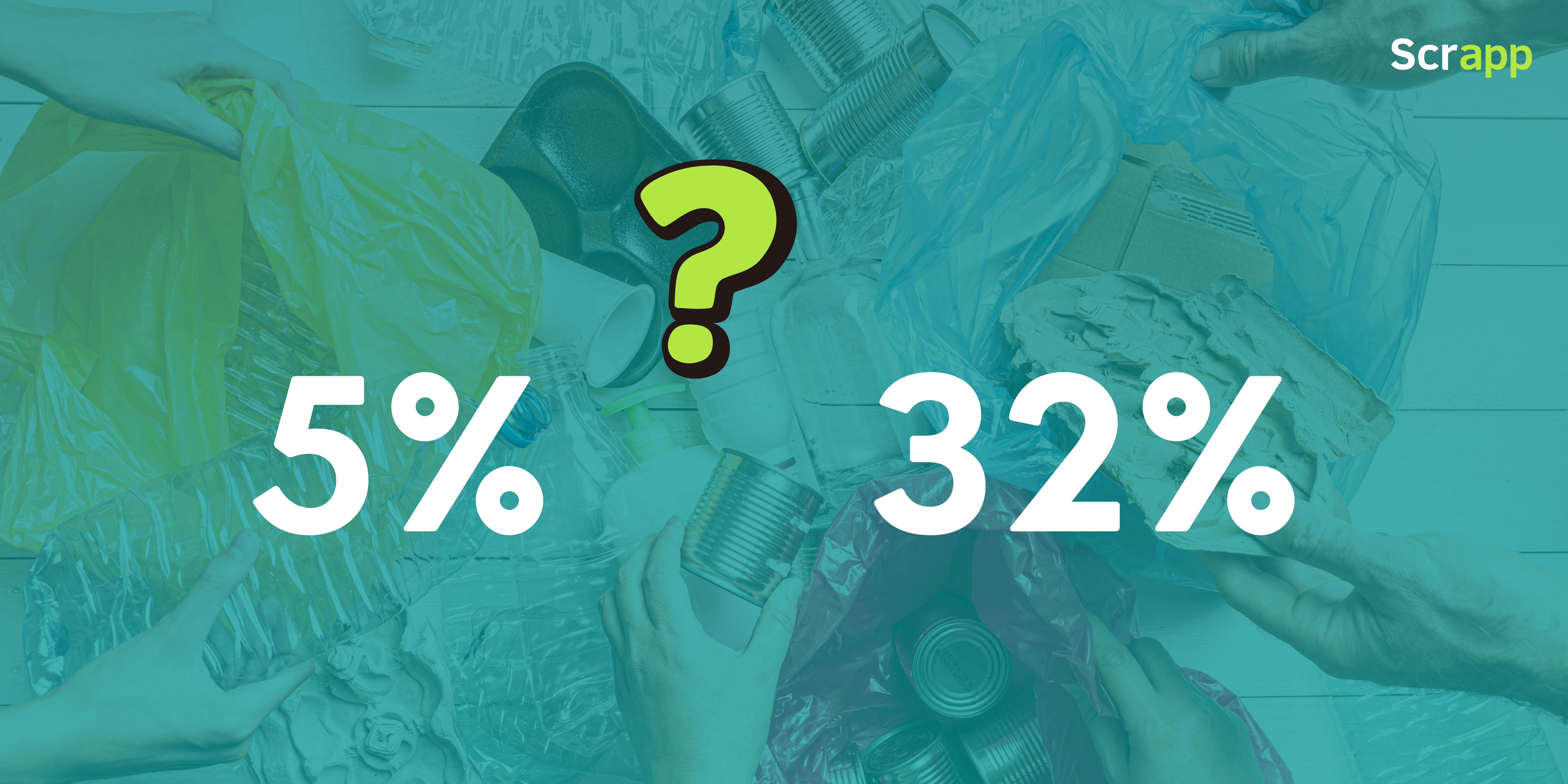
Why are there three different US recycling rates?
The EPA, The Recycling Partnership, and Beyond Plastics each report a different number — and they're all correct but with different methodologies.
The EPA's 32% (from a 2018 study) covers all diverted materials: construction debris, composting, medical waste, and packaged goods. The Recycling Partnership's 21% focuses on packaging and household materials. Beyond Plastics' 5–6% covers all plastics from what we use in electronics, automotive, textiles, and packaging, which have wildly different recovery pathways.
The confusion itself is costly: without a reliable baseline, it's hard to benchmark performance or hold haulers accountable.
What does it mean that waste haulers are "passive receivers"?
They didn't choose what materials they process. They inherited them.
In 2000, newspaper was the backbone of paper recycling — 14.8 million tonnes per year, according to EPA data. By 2018, that had collapsed to 5.1 million tonnes, a 66% decline driven entirely by smartphones. The waste industry had to restructure around a material that was disappearing. They had no say in the matter.
The same logic applies today. Fast fashion has sent a surge of low-quality textiles into the system no one designed for. The waste industry didn't create that surplus — they just have to deal with it. If the waste industry didn't deal with it who would.
How is throwaway culture driving up your landfill costs?
Single-use plastic packaging is forecast to grow 15% by 2035, according to IndexBox. Shein releases 6,000 new clothing styles per day — 65 times Zara's rate and 500 times the industry average. Production velocity is outrunning recovery infrastructure. From a meta perspective, over-procurement and overconsumption are driving up waste and operating costs for all stakeholders in the waste value chain.
For your waste program, that means contamination rates go up, processing costs go up, and haulers pass those costs downstream. If your bills are climbing and you can't isolate why, this is often part of the answer. Fewer than 13% of businesses report on waste data [industry research] — most organizations are negotiating blind.
What can sustainability managers actually do about it?
You can't turn off the tap on throwaway culture. But you can stop chasing a bigger bucket.
The most effective waste programs Scrapp works with don't begin with new bin labels. They start with data: auditing what you generate, tracking diversion by material type, and connecting waste data to hauler contracts so you can negotiate from facts.
Explore Scrapp customer outcomes in our case studies library to see what that looks like in practice, or browse our reports for the research behind these numbers.
Watch the next Weekly Waste Waffle
This post is drawn from 002 of Scrapp's Weekly Waste Waffle webinar series. Next week: how waste hauling works, how secondary material markets price recovered materials, and how to negotiate a waste contract.
Register for the next Weekly Waste Waffle and bring your questions.