UK deposit return scheme 2027: what the 20p deposit means

The UK deposit return scheme (DRS) starts on October 1, 2027. You'll pay a 20p deposit on every single-use drink can and plastic bottle, then get that 20p back when you return the empty container. It's a refundable deposit, not a tax, and it's designed to keep high-value material out of your general waste bin.
Not sure whether your bottle or can will count? Our guide on why "is this recyclable?" rarely has one right answer explains why the answer depends on where you live, and DRS is about to make that answer a lot simpler for drinks containers.
How does the 20p deposit work?
The steps are simple. You pay a flat 20p deposit at the checkout, confirmed by Exchange for Change, the not-for-profit body running the scheme. Once you've finished your drink, you take the empty container to a local return point, such as a supermarket. You drop it into a reverse vending machine, or hand it over at the counter, and get your 20p back.
How you get that money back depends on the retailer. Under the government's guidance, retailers refund deposits at the point of return by voucher, card, or cash. The exact options are still being finalized, so expect some variation from store to store at launch.
Which drinks containers are included?
Single-use containers made from PET plastic, steel, or aluminum, between 150ml and 3 liters, are in scope. That covers most of the plastic water bottles, soft drink bottles, and metal cans you'd pick up in a supermarket.
Glass bottles are not included at launch, and neither are HDPE containers like milk bottles. England, Scotland, Wales, and Northern Ireland are all set to take part, though Wales plans to phase glass in later. Smaller urban shops under 100m² are exempt from hosting a return point, so expect most return points to be at larger stores.
Will my drinks get more expensive?
Upfront, yes. At the checkout, your basket will be a little higher, because every in-scope container carries a 20p deposit. But you only lose that money if you don't return the container. Bring it back and you get every penny back.
This also changes how smart shoppers pick their drinks. Ten small bottles means a £2 deposit sitting in your basket. One large bottle with the same volume means a 20p deposit, plus typically less packaging overall. That's an upstream decision that reduces waste before anything reaches a bin, which is the real goal of waste reduction.
How is DRS different from the US bottle bill?
The idea isn't new. Oregon passed the first US bottle bill in 1971, and ten US states now have container deposit laws, including California, New York, Massachusetts, and Michigan. Most still pay a 5 cent deposit, with Michigan, Oregon, and Connecticut at 10 cents. A 1971 nickel would be worth roughly 40 cents today [NEEDS SOURCE], so the value of that deposit has shrunk a lot over the decades.
The UK is starting higher. At 20p, the deposit gives people a much stronger reason to return their containers instead of tossing them in the bin.
What is a circular system?
A circular system is one where materials keep getting used again instead of being thrown away after a single use. Most of our economy still runs in a straight line: take raw materials, make a product, use it, then dispose of it. A circular system closes that loop. Used products are collected, the material is recovered, and it's made into something new.
A drinks can is a good example. In a circular system, the can is returned, melted down, and turned into a new can, instead of ending up in a landfill while a new one is made from scratch. The catch is that the material has to come back clean. Once it's mixed with food scraps or the wrong plastics, it's much harder to recover, which is why a deposit scheme is so well suited to drinks containers.
Why does a deposit work better than regular recycling?
Both bottle bills and DRS share one goal: get high-value material back into a circular system. A can returned through a machine is captured clean, on its own. It doesn't get crushed under food waste, mixed with the wrong plastics, or contaminated in the bin on its way to the recycling facility.
That makes it far easier to turn used cans and bottles back into new ones. You do the sorting at the moment you return the container, and the material stays valuable. That's the same logic behind every good zero-waste habit: keep materials in use for as long as possible.
How can you find a return point near you?
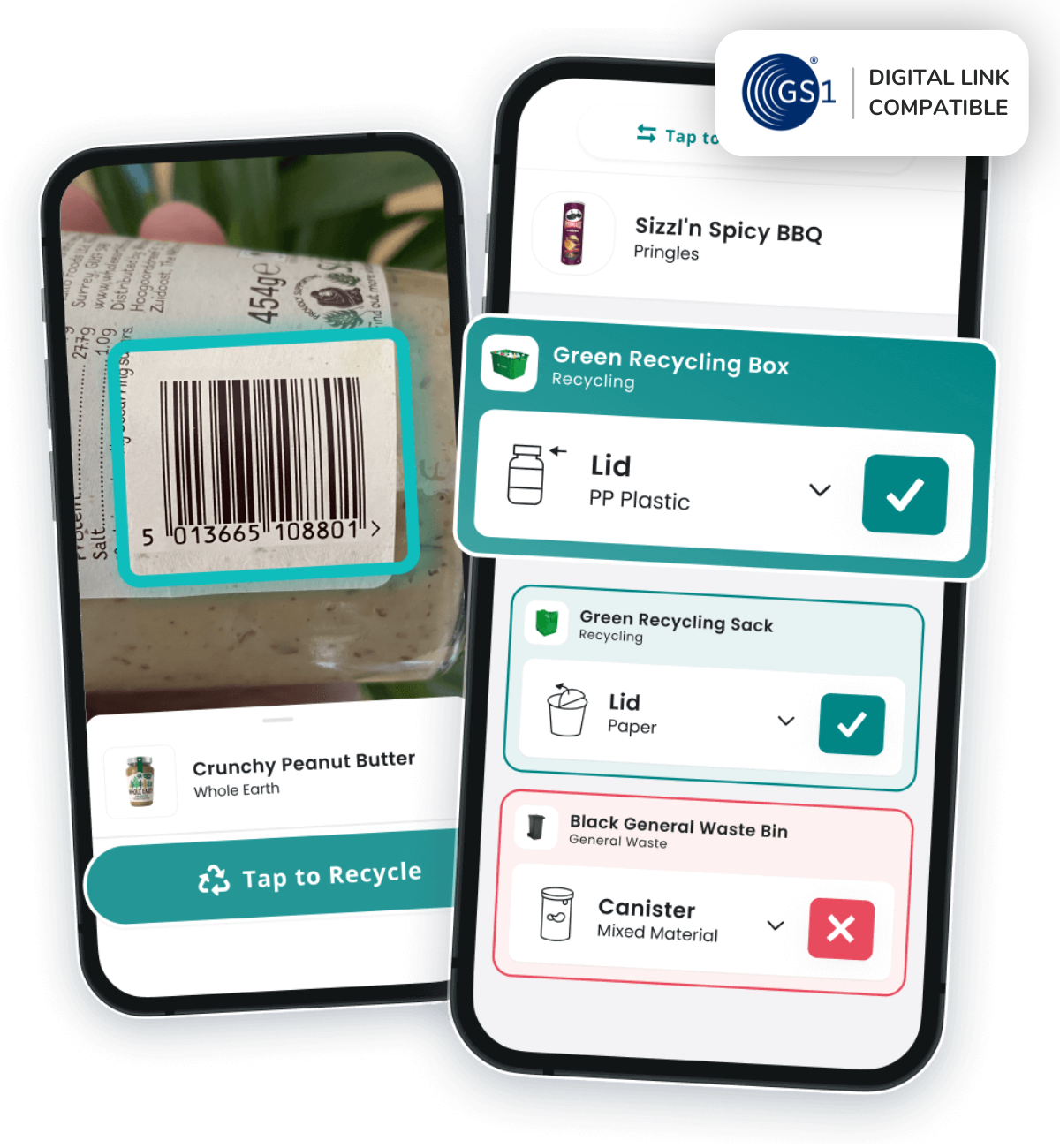
Return points will mostly be supermarkets and other larger retailers, and the full network is still being built out. Scrapp® is adding DRS return points to the more than 40,000 drop-off points already mapped in the Scrapp mobile app, so you can check the map to see which option is most convenient for getting your 20p back.
Not sure what to do with the containers DRS doesn't cover, like glass jars or milk bottles? Our complete guide to how to recycle covers the rest.
Frequently asked questions
When does the UK deposit return scheme start?
The scheme starts on October 1, 2027. From that date, in-scope drinks containers sold in England, Scotland, Wales, and Northern Ireland carry a 20p deposit.
Does the deposit apply to glass bottles?
Not at launch. The scheme covers single-use PET plastic bottles, steel cans, and aluminum cans between 150ml and 3 liters. Glass bottles and HDPE containers such as milk bottles are outside the scheme, so keep recycling those through your usual curbside collection or local bottle bank.
How do I get my 20p back?
Take your empty container to a return point and use the reverse vending machine, or hand it over at the counter. Retailers refund the deposit by voucher, card, or cash, depending on the store. The deposit is redeemed by whoever returns the container, not only the person who bought the drink.
Is the deposit just a price increase?
No. The deposit is fully refundable when you return the container. You'll pay a little more at the checkout, but you get that money back, so it only costs you if you throw the container away. Think of it as a small loan you pay back by recycling.
What happens if I don't return my containers?
You keep the empty container and lose the 20p. Returning your cans and bottles also keeps them out of general waste and gets them back into the recycling loop, so it's worth the short trip.
Your 20p is worth getting back, and your containers are worth keeping out of the bin. Get the free Scrapp® app and check the map for the most convenient return point near you.