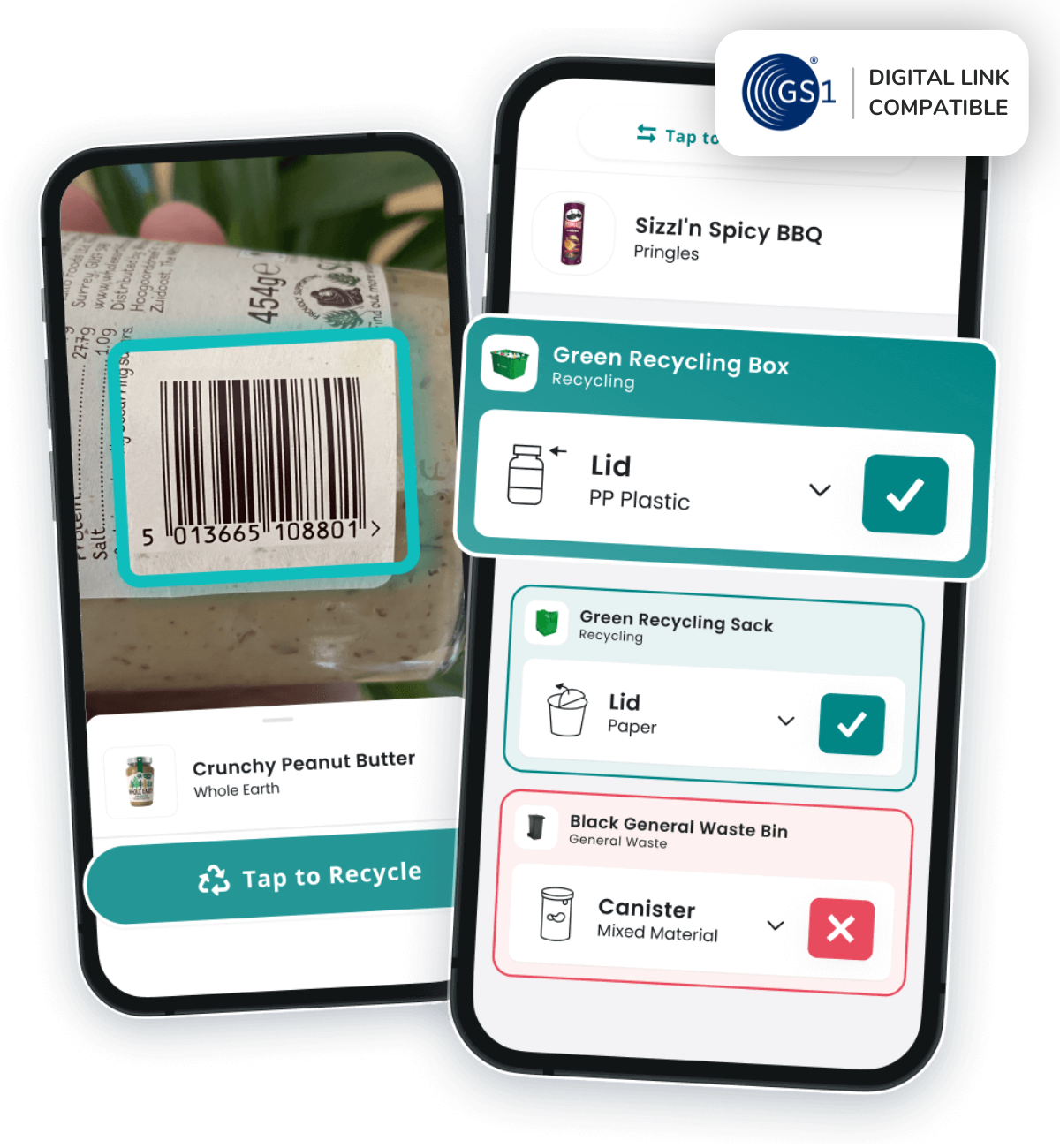
.webp)
Waste doesn't speak one language. Neither does your team, your community, or the people you serve. That's why we've expanded Scrapp's mobile app to support 20 languages — so more people better understand disposal guidance, and take action in the language they're most comfortable with.
Why language access matters for the waste world
Here's the reality: we are an increasingly globalized world, where a variety of cultures and languages may co-exist in the same community. The problem is that the waste is ubiquitous, but unique. That's a problem when your workforce, residents, or customers span dozens of languages and cultural backgrounds, all produce waste, but may not be able to keep up with the industry terms being used.
Contamination often starts with confusion. When someone doesn't understand a disposal label or notification, items end up in the wrong bin. That drives up contamination rates, increases costs, and undermines the programs brands, businesses and municipalities work hard to build.
Making Scrapp multilingual is a practical step for improving waste campaigns, cutting contamination at the source through reducing confusion by the bin.
20 languages. Over 5 billion speakers worldwide.
As part of our upgrade from Scrapp 4.0 to 5.0, we chose these 20 languages based on the communities our clients serve and the global reach of each language. Here's the full list and the approximate number of speakers each one represents globally:

English (US)
— The most widely spoken language worldwide when counting both native and second-language speakers, and the default language for most waste data platforms.

English (UK)
— Covering distinct spelling, terminology, and disposal conventions for users across the United Kingdom.

Chinese (Simplified)
— 1.18 billion speakers, driven by China's massive population and widespread use across East and Southeast Asia.


Chinese (Traditional)
— Used across Taiwan, Hong Kong, and Macau, as well as by Chinese-speaking communities worldwide who use traditional characters.

Korean
— 80 million speakers, primarily in South Korea, with significant communities in the US, Canada, Japan, and Australia.

Spanish
— 475 million speakers, the official language of Spain and the second most spoken native language in the world.

Spanish (Latin America)
— 400+ million speakers across more than 20 countries, from Mexico City to Buenos Aires to Miami.


French — 312 million speakers spanning five continents, with two-thirds of all French speakers now based in Africa.
French (Canadian) — Serving Canada's 10 million+ French speakers, predominantly in the province of Quebec.

Bengali
— 273 million speakers, the official language of Bangladesh and widely spoken across eastern India.

Portuguese (Brazilian)
— 215 million speakers, making Brazil the largest Portuguese-speaking country in the world by a wide margin.

Portuguese (Portugal)
— 10 million speakers in Portugal, with additional communities across Europe and parts of Africa and Asia.

German
— 134 million speakers across Central Europe, including Germany, Austria, and Switzerland.

Vietnamese
— 95 million speakers, primarily in Vietnam, with growing diaspora communities in the US, France, and Australia.

Italian
— 90 million speakers, concentrated in Italy and Switzerland, with communities across the Americas.

Polish
— 45 million speakers, with Poland's population forming the core and significant communities across Europe and North America.

Ukrainian
— 44 million speakers, primarily in Ukraine, with diaspora communities in Canada, the US, Poland, and Germany.

Romanian
— 28 million speakers in Romania, Moldova, and communities across Europe and Israel.

Nepali
— 19 million speakers in Nepal, India, Bhutan, and a growing global diaspora.

Haitian Creole
— 13 million speakers, the most widely spoken creole language in the world, used across Haiti and diaspora communities in the US, Canada, and the Caribbean. Haitian Creole was one of the first languages we prioritized when Scrapp officially launched in Miami-Dade, where it's spoken widely across the county.

Welsh
— 830,000 speakers in Wales, where the language is experiencing a cultural revival with a government target of one million speakers by 2050.
Add those up and over 5 billion people — roughly 60% of the global population — speak at least one of these 20 languages. That means more than half the world can now use Scrapp in a language that feels natural to them.
What's available in every language
This isn't a partial translation. We've localized the core experience across the platform:

Disposal guidance
— Clear, location-specific instructions on what goes where, in your preferred language. No more guessing at a bin.

Educational content
— The learning materials that help teams and residents understand why waste sorting matters and how to do it right.

Notifications
— Alerts, reminders, and updates delivered in a language users actually read.

Search functionality
— Find items, materials, and guidance without needing to search in English first.
How to switch your language
You can change your language manually in the Scrapp mobile app at any time — head to your settings page, select your preferred language from the dropdown, and you're done. The interface updates immediately.
But in most cases, you won't even need to do that.
On iOS, Scrapp automatically detects your system language. If it's one of our 21 supported languages and you haven't manually set a preference in the app, Scrapp will switch to it by default. You can also set your language for Scrapp specifically by going to Settings → Apps → Scrapp and choosing your preferred language from there.
On Android, Scrapp works the same way — it detects your system language automatically and uses it if it's supported. If you're running Android 13 or above, you can also set a per-app language preference by going to Settings → Languages & Input → App Languages → Scrapp.
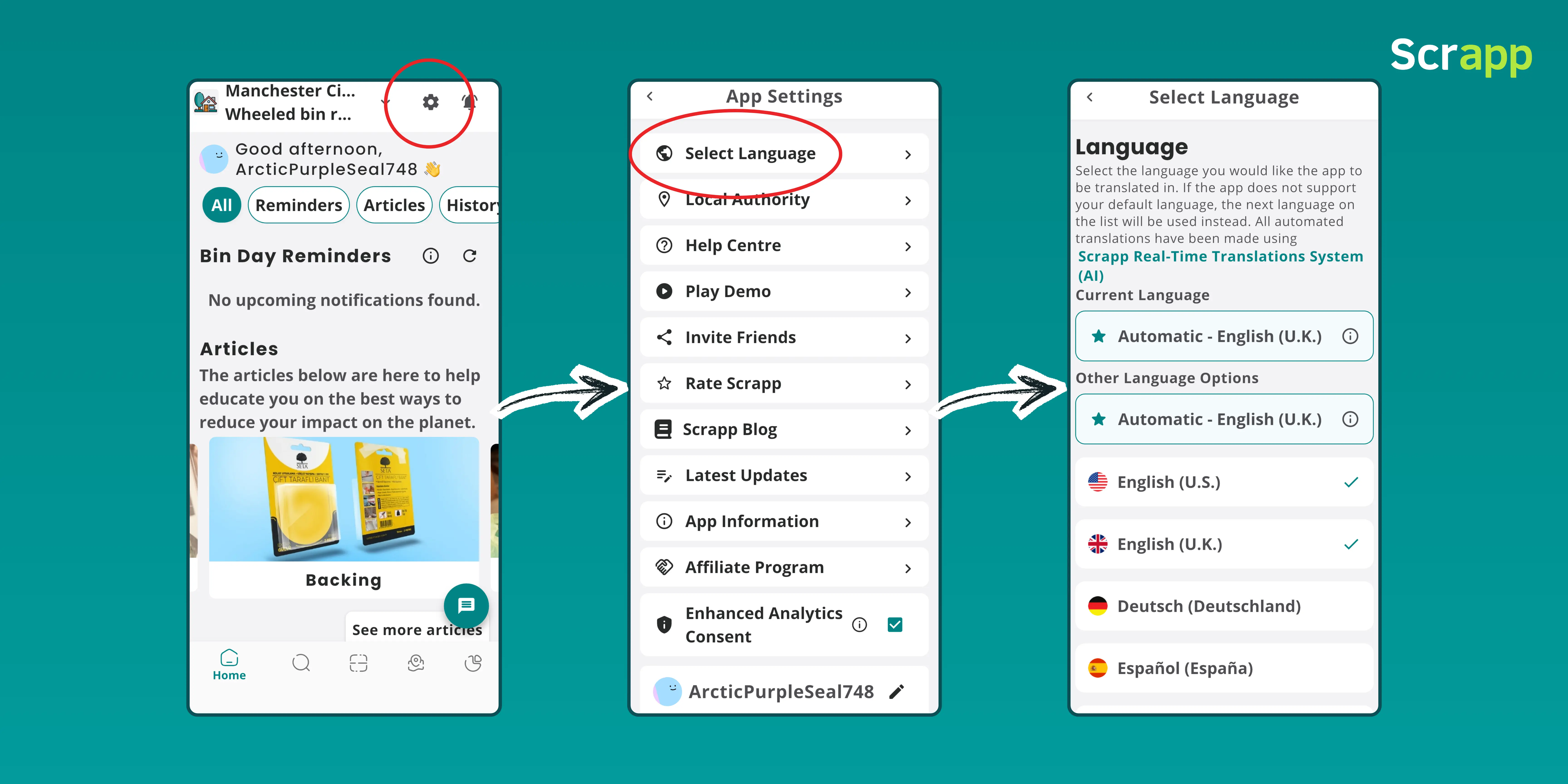
If you manage a team or community program, this means you can point new users to Scrapp knowing they'll be able to navigate it from day one — regardless of the language they speak at home. No setup required.
Built for the communities that need it most
This update matters most for the organizations working with multilingual teams. Municipal waste programs serving diverse communities. Businesses with frontline workers who speak different languages. Brands operating across multiple markets.
When people can read disposal guidance clearly, contamination drops. When notifications land in a language someone understands, engagement goes up. And when your waste tracking data reflects what's actually happening — not what got lost in translation — you make better decisions.
What's next
We'll continue expanding language support based on where our clients operate and the communities they serve. If there's a language your community needs that isn't on the list yet, let us know — we're listening.
In the meantime, try the app, update your settings, share the news with your team, and help more people learn about waste in the language they think in.