Two billion cans, no deposits: the World Cup's £360 million missed opportunity
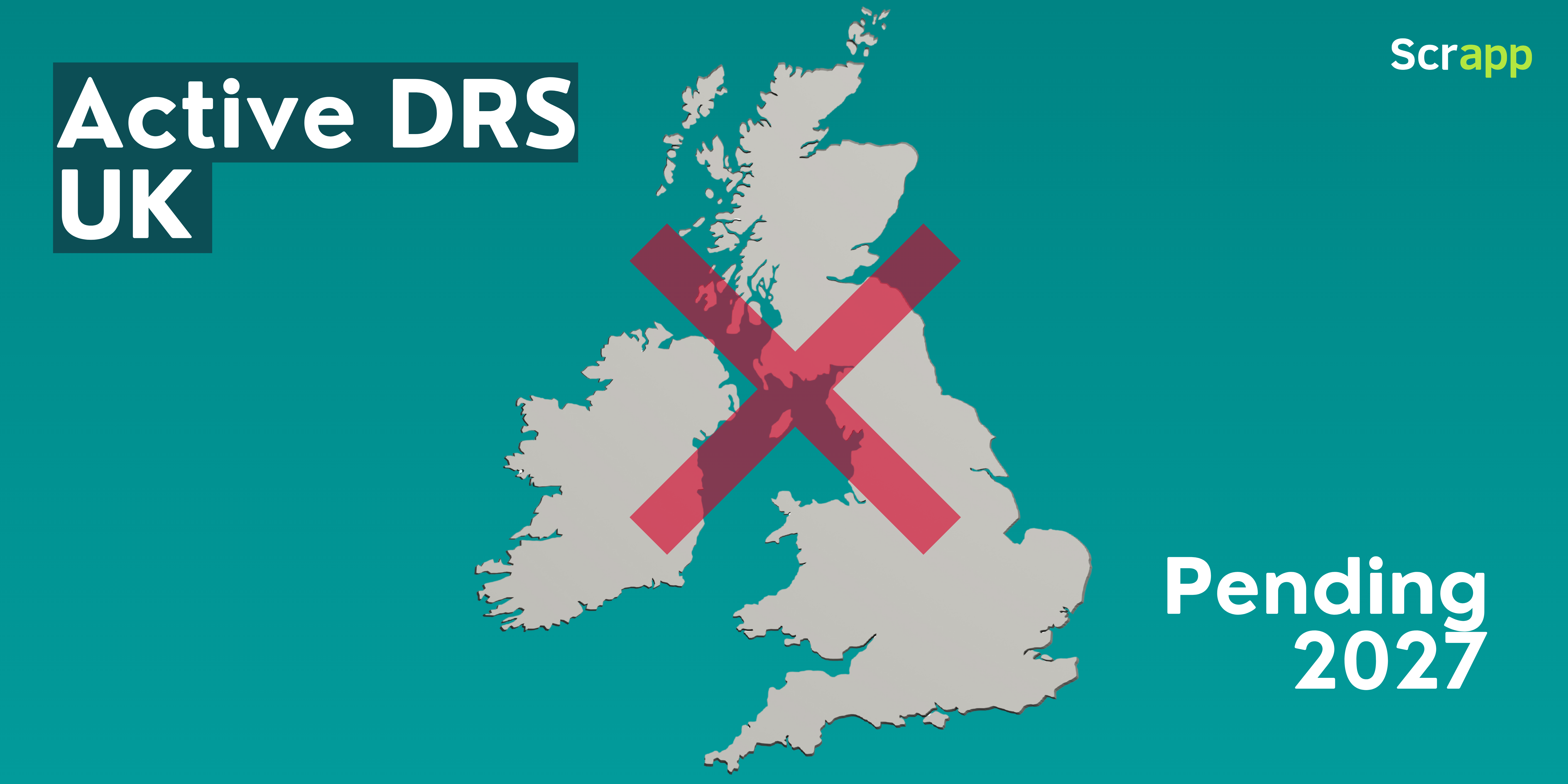
The UK's Deposit Return Scheme would have put up to £360 million back in fans' pockets during the 2026 FIFA World Cup, if it were live. It isn't. DRS launches October 1, 2027, more than a year after the tournament ends on July 19. Instead, two billion cans will be consumed across 39 days with no deposit mechanism in place, leaving roughly £28.5 million in scrap recycling value as the only economic return, and most of that won't reach consumers at all.
For businesses running hospitality, fan zones, or events during the tournament, this gap is worth understanding. Without a deposit signal, the responsibility for capture sits entirely with whoever is managing waste on the ground.
How much are UK fans actually drinking?
According to Recycle Now and Every Can Counts, two billion canned drinks will be consumed across the UK during the 39-day tournament, covering beer, cider, and soft drinks across 104 games broadcast free on BBC and ITV. That works out to approximately 68 cans per person across the roughly 29 to 30 million UK adults watching.
The pub trade is braced for a surge too. Bar transactions rose 213% and revenue 119% during England's opening win over Croatia, with hospitality data pointing to a 42% increase in pub sales across the group stage (Reward hospitality transaction data, 2026). That volume of single-use packaging flowing through hospitality venues in a concentrated window is a waste management event in its own right.
Would a deposit return scheme be worth it?
The tournament had already broken the all-time attendance record, passing 3.6 million stadium spectators on June 25 with 44 matches still to play, surpassing the mark the 1994 tournament had held for 32 years. Jefferies, meanwhile, estimates an additional 5.68 million hectolitres of global beer demand during the tournament, with North America capturing a disproportionate share as host. The answer to whether a deposit scheme would be worth it looks very different depending on which country you're watching from. (One note on scope: the tournament is co-hosted across the USA, Canada, and Mexico, but Mexico has no national deposit scheme, so the live comparison runs across the US and Canadian host cities below.)
Would the DRS be worth it in the UK?
The UK's DRS, when it launches, will cover aluminium and steel cans and single-use PET plastic bottles at a confirmed deposit of 20p per container. Glass is excluded in England, Scotland, and Northern Ireland, which means the pub surge largely falls outside the scheme anyway.
Had it been in place for the World Cup: two billion cans at 20p equals £400 million in deposits collected. At a mature 90% return rate, fans would have claimed back £360 million, or roughly £12 back per UK adult watching over the tournament. Compare that to the current reality: WRAP calculates the scrap recycling value of those two billion cans at approximately £28.5 million, based on a market rate of around £1,000 per tonne for aluminium. That money flows to recyclers and the materials market, not to consumers. The DRS model would deliver roughly 12.6 times more value back to fans than the current scrap recycling system. Instead, the 2026 tournament plays out entirely outside any deposit mechanism.
The 20p deposit isn't just a consumer incentive — it's also a revenue stream for businesses operating return points. Exchange for Change has confirmed a return handling fee of 3p per container for manual return points, and 5p per container for automated reverse vending machines (RVMs) up to 225,000 containers per year. That means businesses keep 15% of each 20p deposit (manual) or 25% (RVM) as direct revenue for processing returns — the rest goes back to the consumer or, where containers aren't returned, to Exchange for Change as the scheme operator. Applied to the World Cup window: at a 90% return rate across two billion cans, the total handling fee pool across the UK retail sector would have been £54 million (manual) to £90 million (RVM). For a busy pub, fan zone, or event venue running a return point through the tournament, that handling fee income could represent a meaningful offset against the cost of operating the collection infrastructure — but only if the scheme were live. It isn't.
Would the DRS be worth it in the USA?
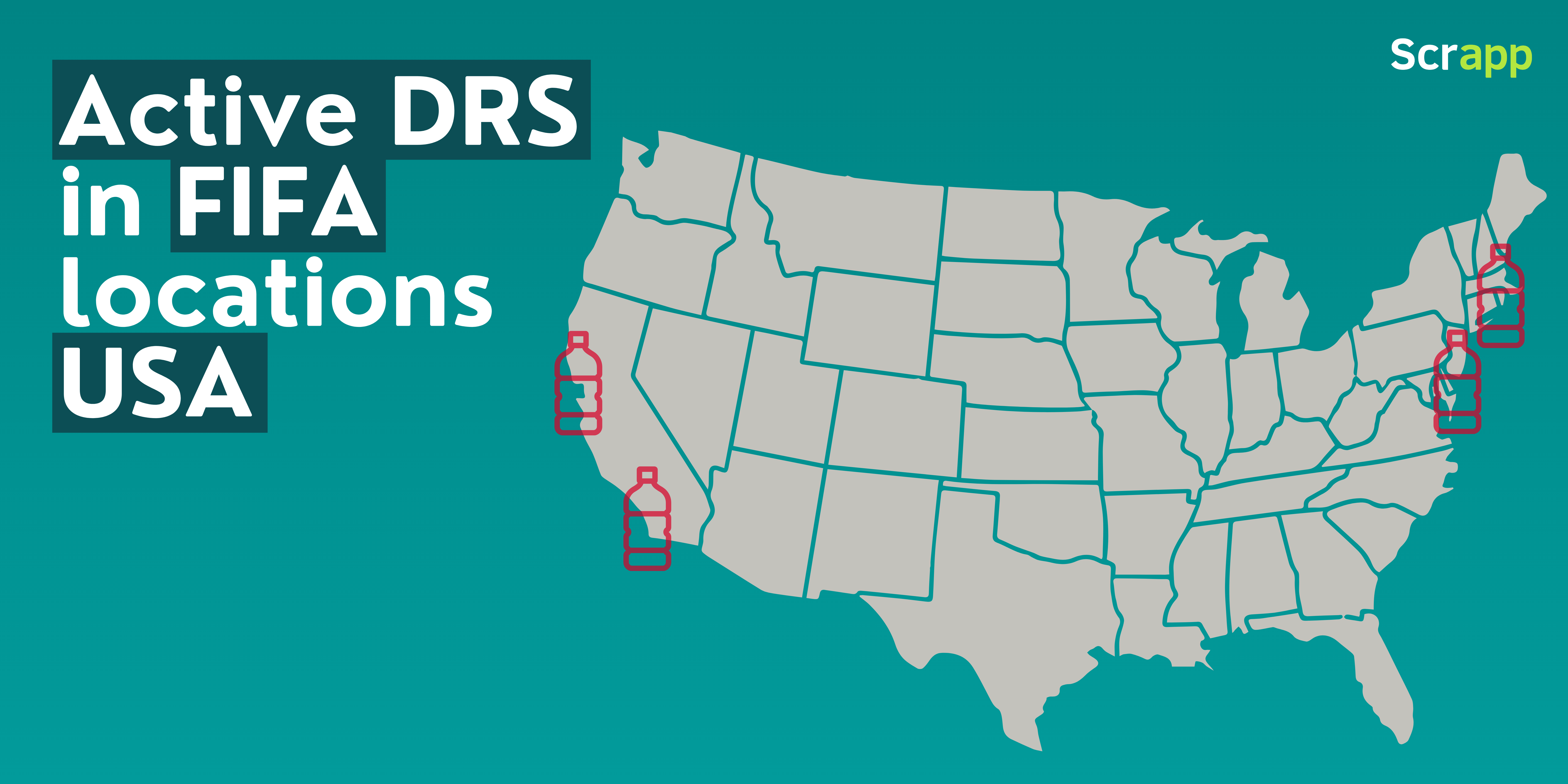
The USA is hosting across 11 cities, but only 4 of them sit in bottle-bill states: Los Angeles and San Francisco (California, 5 to 10¢), Boston (Massachusetts, 5¢), and New York (5¢ on the NY side only). The most glaring gap: the World Cup Final is played at MetLife Stadium in East Rutherford, New Jersey, a state with no deposit law at all. Cross the Hudson into New York and you'd get 5¢ back. At the most-watched game of the tournament, New Jersey fans get nothing. With only around 27% of the US population living in a bottle-bill state, an estimated $8.6 million in deposits could flow back to fans in covered areas, while the other 73% forfeit that value entirely.
Would the DRS be worth it in Canada?
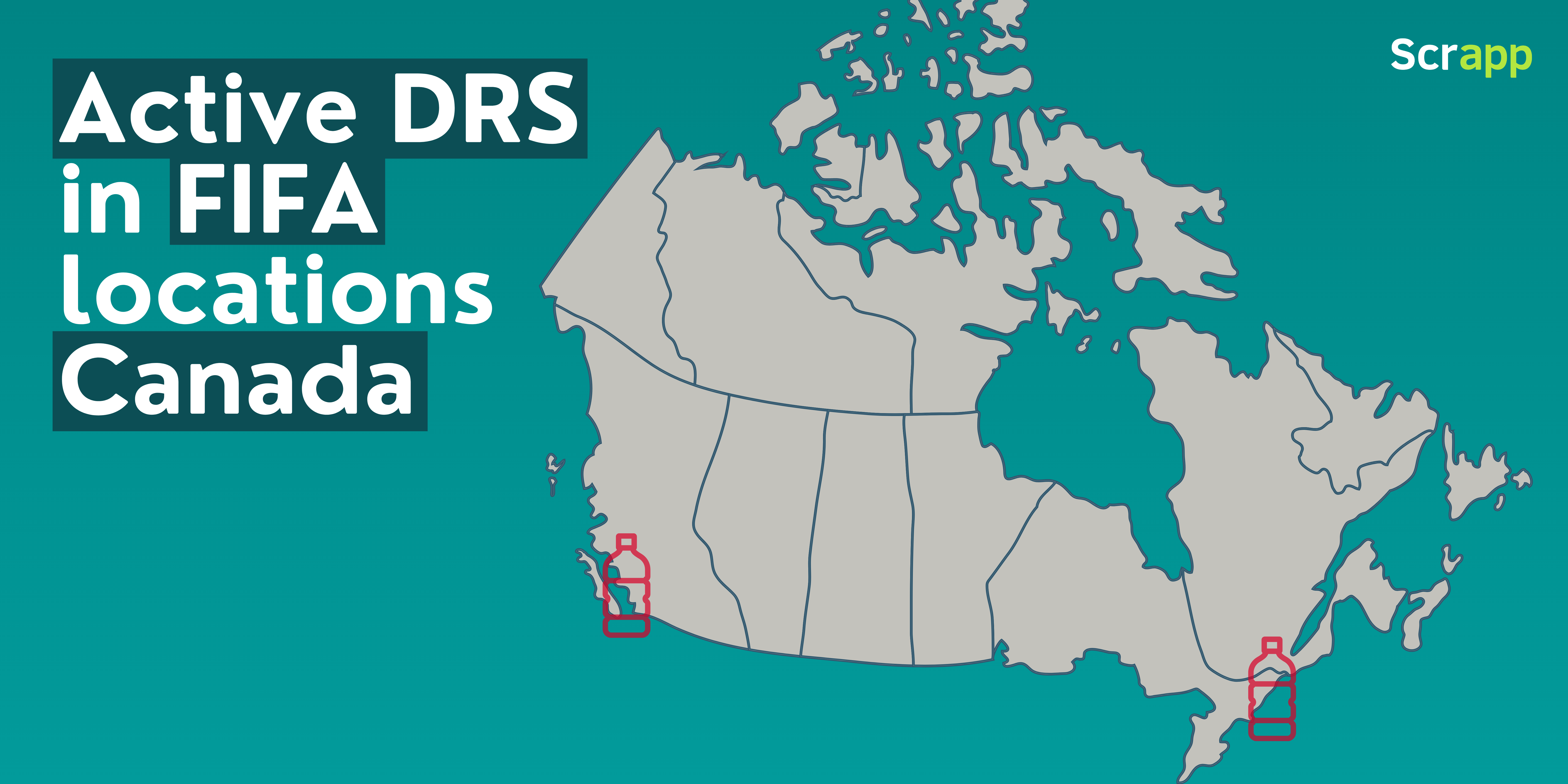
Canada has two host cities, and their situations are near-opposites. Vancouver sits in British Columbia, which runs a mature full-coverage DRS at a flat 10¢ per container across all drink types. Toronto, however, is in Ontario, one of only two Canadian provinces where the deposit applies to alcohol containers only. A beer can bought at BMO Field carries a deposit. A soft drink bought at a Toronto convenience store carries none. Overall, an estimated CAD $5.4 million could flow back to Canadian fans through mature provincial schemes, but Toronto's partial gap means the host city with the largest fanbase captures only a fraction of what Vancouver will.
Why do 'paper' cups still end up in landfill?
Deposits only ever touch cans and bottles. The bigger contamination problem on a fan-zone floor is the packaging that *looks* recyclable and isn't. Xampla-commissioned research found that 49% of UK consumers didn't realise that standard paper or card takeaway containers are typically lined with plastic. That liner, there to prevent leaks, is exactly what makes most "paper" packaging unrecyclable in a standard recycling stream. The cup looks recyclable. At the materials recovery facility, it behaves like contamination.
The appetite for change is there. In the same research, 74% of UK consumers said major sporting events like the World Cup should use only plastic-free food packaging (Xampla/YouGov, June 2026). The public wants better packaging at events. What lands in the bin is decided well before that.
The recyclability of a package is almost always decided at the design stage, not at the bin. Knowing what you're actually buying, and what stream it's compatible with, is the starting point for any event operation. Without that spec data, bin provision is guesswork. It's the same issue FIFA created at the tournament level by reversing its own reusable bottle policy and defaulting to single-use plastic: the decision is made upstream, the contamination lands downstream.
What can businesses running events do differently right now?
Without a deposit mechanism, the responsibility for capturing value from those two billion cans sits with the venues and businesses managing the waste. Three things consistently separate programs that recover materials from ones that produce contamination reports.
Packaging specification. Do you know whether what you're buying is genuinely recyclable in your local stream, or are you relying on what's printed on the pack? Spec data is the starting point. Without it, your contamination rate is unpredictable.
Stream separation at the bin. The disposal moment is fast and distracted, and most fans default to whichever bin is closest. Clear, specific stream separation, with aluminium cans kept apart from general waste, dramatically increases correct sorting without requiring anything extra from guests.
Post-event measurement. Weight, contamination rate, material split by stream. A single match-day waste audit gives you the data to improve the next event and the evidence for an ESG or sustainability report. Without measurement, every event starts from zero.
Scrapp works with sustainability managers and event operations teams to turn waste data into something actionable: not just a bag count, but a clear picture of what's being recovered, what's being lost, and what's driving the gap. See how businesses use Scrapp's waste tracking tools.
Two billion cans. £28.5 million in scrap value. £360 million that could have gone back to fans, if the DRS had launched in time. The UK's deposit scheme is 15 months away. The USA is hosting the Final in a state with no bottle bill. Canada's largest host city collects deposits on beer but not soft drinks. In the gap, it falls to whoever is managing waste at venue level. That's where spec data, stream separation, and post-event measurement actually matter.
Book a 15-minute call with the Scrapp team to see how event waste tracking works in practice