⚽️ FIFA's water bottle U-turn: Single over multi-use plastic

FIFA banned reusable water bottles from 2026 World Cup stadiums on June 2, then reversed course three days later after global backlash. The fix? Each fan can now bring one factory-sealed, 20oz disposable plastic bottle. Across 104 matches and more than 5 million expected fans, that's a single-use waste stream created overnight — by policy.
For anyone who manages waste at a venue, a brand, or a community program, this story is more than World Cup drama. It's a live case study in how fast an upstream decision becomes a downstream waste bill. And it's a reminder that rising disposal and [packaging costs are already heading up] — before anyone mandates extra plastic.
What happened with the World Cup water bottle ban?
FIFA's original stadium rules allowed fans to bring a transparent, reusable bottle of up to 1 liter into the 16 North American venues. Then, on June 2, 2026, an update to the stadium code of conduct quietly removed that allowance: "for the avoidance of doubt, reusable water bottles may not be brought into the stadium." FIFA cited the risk of bottles being thrown at players and fans. References to hydration stations disappeared from the document at the same time.
The backlash was immediate. England's Free Lions supporter group called it "the latest money grab." Politicians across host countries piled on. With forecasts of 90°F+ heat in many of the cities staging the tournament's 104 matches, critics framed the ban as a safety risk and a captive-market play rolled into one, as reported by [ESPN].
On June 5, FIFA reversed — sort of. Fans at US and Canada venues can now bring one soft, factory-sealed, disposable plastic bottle of up to 20oz (590ml). Hard-sided reusable bottles remain banned for "safety and security reasons."
Why does swapping reusable for disposable matter?
Because the reversal solved a hydration problem by creating a waste problem.
Run some napkin math — on the fan-carried bottles alone, before a single in-venue drink is sold. FIFA projects more than 5 million fans across the tournament, each now permitted one disposable bottle. Assume 30–50% of those bottles actually land in a recycling bin. That's a generous capture rate: documented stadium diversion rates typically run 13–31% without dedicated zero-waste programs (EPA's sports venue recycling guide; venue case studies), and the US national PET bottle recycling rate sits between 28% (The Recycling Partnership) and 30.2% (NAPCOR, 2024). Here's how the policy plays out:
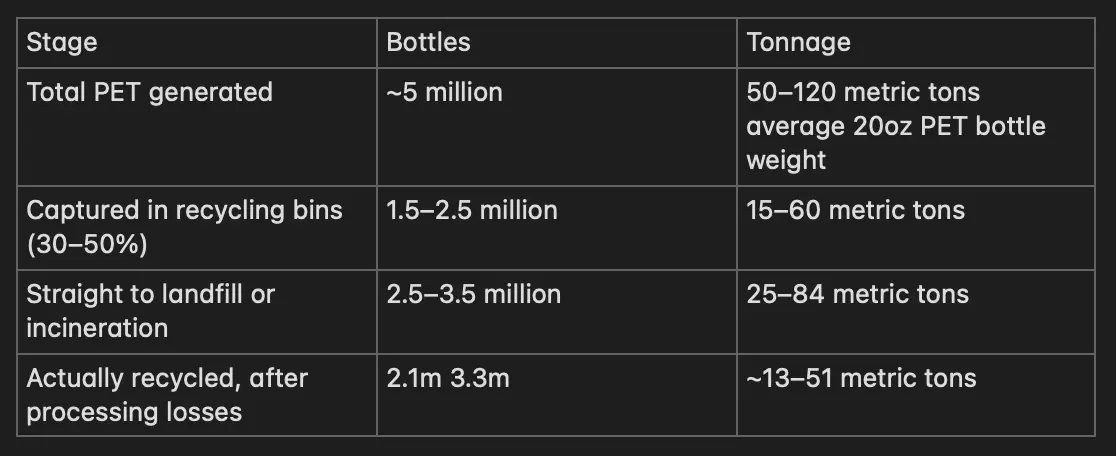
The last row matters. Captured doesn't mean recycled: applying NAPCOR's 2024 reclamation system efficiency of 85.2% to what's collected, the policy's best case sees roughly 4 in 10 bottles become recycled PET. The worst case is closer to 1 in 4 — right in line with the national average, which is a useful sanity check on the assumptions.
Every one of those bottles is a cost. Venues pay to collect, haul, and dispose of event waste, and contaminated recycling often gets charged — or landfilled — as trash. We've written before about why [the recycling system was built to fail], and this is a textbook example: a policy upstream quietly decides what fills the bins downstream, and the recycling system can't absorb the difference.
The irony writes itself. The 2026 World Cup has been promoted as the most sustainable edition yet. Its bottle policy now requires single-use plastic as the price of admission hydration.
Could FIFA have designed the waste out?
Yes — and the tension FIFA faced is real, not invented. Thrown objects are a genuine security concern at football matches. But security and zero-waste goals aren't mutually exclusive. Venues around the world already run models that handle both:
- Soft-sided, transparent reusables. The original policy already covered this. A soft 1L bottle poses no more throwing risk than a sealed 20oz one.
- Deposit-return cup schemes. Many European stadiums charge a small deposit on sturdy cups that fans return after the match. Bottles stay outside; waste stays low.
- Refill infrastructure at the perimeter. Hydration stations outside the security line let fans empty bottles before screening and refill after.
None of these are exotic. What they share is a design mindset: decide what waste you're willing to create before the event, not after the bins overflow.
What can venues and brands learn from FIFA's U-turn?
Three lessons travel well beyond football.
1. Policy is a waste decision.
Any rule about what enters your site — packaging specs, catering contracts, security rules — is also a rule about what leaves it as waste. Treat it that way at the drafting stage.
2. You can't manage what you don't measure.
Industry research suggests fewer than 13% of businesses report on their waste data. FIFA couldn't tell the public what its policy change would mean in tonnes of plastic, because that number likely doesn't exist. If you track your waste streams, you can model a decision like this in an afternoon — and defend it with data.
3. Reversals are expensive; design reviews are cheap.
FIFA absorbed a week of global criticism and still ended up with a worse environmental outcome than its original policy. A waste impact check before publishing the rule change would have cost nothing.
This is exactly where Scrapp® sits: giving teams the waste data to see the downstream effects of upstream choices, before those choices ship.
Frequently asked questions
Can fans bring water bottles into 2026 World Cup stadiums?
Yes, with limits. As of FIFA's June 5, 2026 policy, fans at US and Canada venues can bring one soft, factory-sealed, disposable plastic water bottle up to 20oz (590ml). Hard-sided and reusable bottles are not permitted under the current rules.
Why did FIFA ban reusable water bottles in the first place?
FIFA cited safety: bottles can be thrown and cause injury to players and attendees. Critics countered that the original rules already limited fans to soft, transparent reusables, and that the ban pushed fans toward buying water inside stadiums during a tournament played in 90°F+ heat.
How much plastic waste will the new policy create?
There's no official estimate. With more than 5 million fans expected across 104 matches, the permitted sealed bottles alone could put millions of single-use containers into venue waste streams. Even if 30–50% of those bottles land in a recycling bin — above typical stadium capture rates of 13–31% — 2.5 million or more would still go to landfill. The national PET bottle recycling rate of 28–30% (The Recycling Partnership; NAPCOR) suggests the real number runs higher.
What should large venues do differently?
Start with data. Measure your current waste streams, model the impact of any policy or packaging change before it goes live, and pair security rules with refill or deposit-return infrastructure. Venues that track waste data can quantify trade-offs in advance instead of discovering them in the press.
Design waste out before it hits the bin
The cheapest bottle to manage is the one that never enters the stadium. If your team makes decisions that shape what your sites, products, or events throw away, give them the data to see those effects early. Explore how Scrapp helps teams [design waste out of their operations].