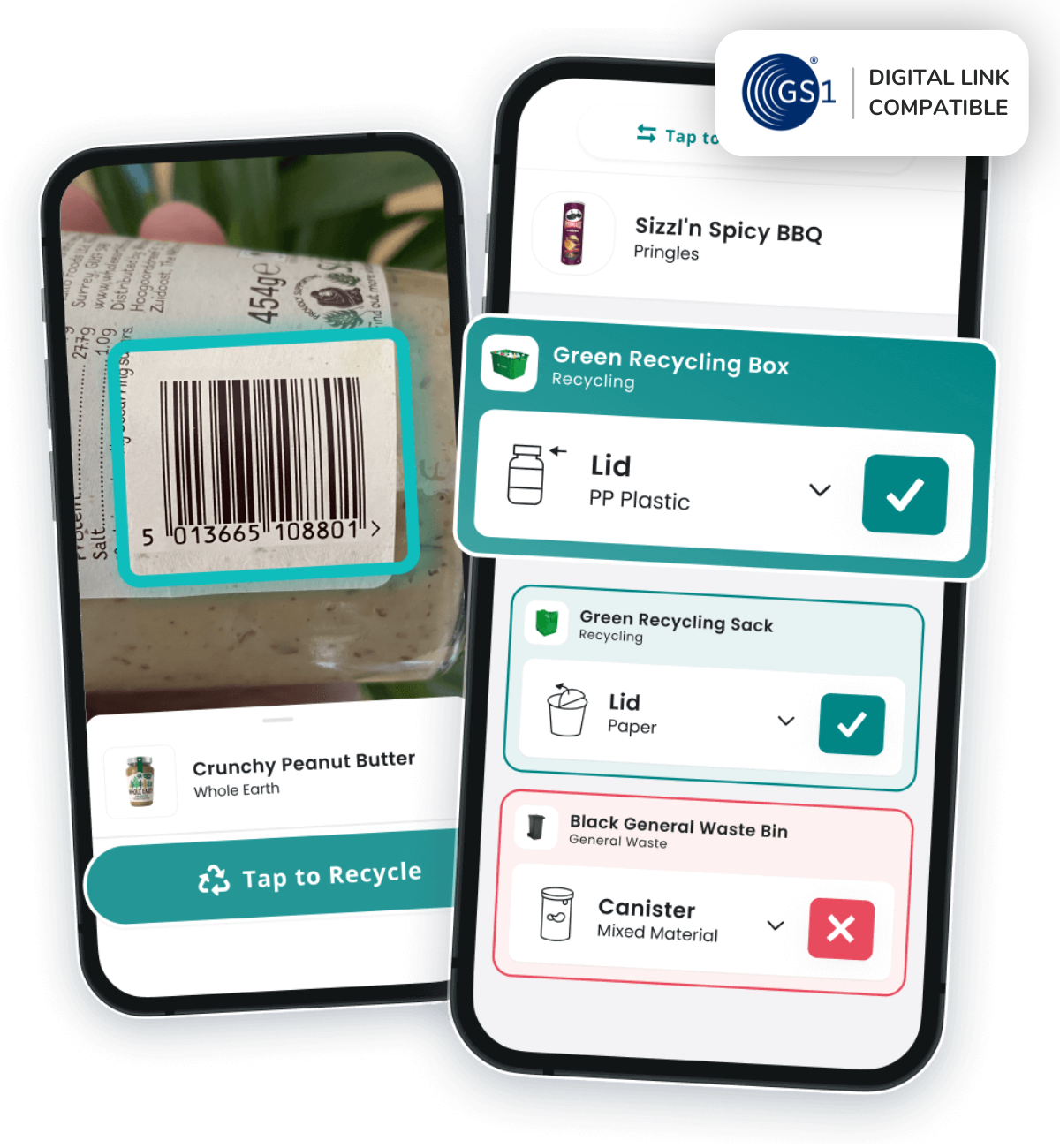
🏎Can we reduce, or recycle our way out of the waste crisis?

.jpg)
The question everyone is asking: Should we focus on reducing waste or recycling it? It's a debate that surfaces constantly among waste consultants, sustainability managers, and everyday consumers trying to shrink their environmental footprint. Our latest industry report, The Race to Zero-Waste: Can we reduce, or recycle, our way out of the waste crisis?, puts real numbers behind the answer.
For 28 days, two Scrapp team members tracked every gram of waste they produced. One followed a prevention-first approach (Team Reduce), rejecting waste before it entered their life. The other maintained business-as-usual consumption but couldn't use curbside recycling - anything they couldn't divert themselves counted against their total (Team Recycle).
The results were clear: prevention outperformed recycling by almost 4x. Team Reduce produced just 6.85kg over the month. Team Recycle generated 28.92kg. Scaled annually, that translates to 90kg versus 347kg - both well below national averages, but with dramatically different trajectories.
Why Consumer Behavior Trumps Infrastructure
Here's the insight that surprised us most: both participants produced far less waste than their respective national averages simply by tracking what they threw away. Team Reduce achieved 19% of the UK average; Team Recycle hit 43% of the US average. The act of measurement itself changed behavior. Like we always say - what gets measured gets managed.
This finding has major implications for waste reduction programs. Think of it like fitness tracking: counting calories influences eating habits without requiring a complete lifestyle overhaul. Similarly, conscious consumption (the active monitoring of what you purchase and discard) can cut individual waste footprints by 50–80% according to our data.
Time emerged as the critical variable in zero waste adoption. Financial incentives alone don't drive change. US bottle deposits, for instance, should be worth $0.40 adjusted for inflation, not the current $0.05. Middle-class consumers who generate most beverage container waste, have no meaningful reason to participate. The barrier isn't awareness; it's convenience.
What This Means for Waste Consultants and Sustainability Teams
The data points toward a sequenced approach: prevention must lead, with recycling as the essential backstop. According to current global consumption rates, we have consumed more materials in the past six years than in the entire 20th century. No infrastructure, no matter how sophisticated, can keep pace.
For organizations implementing zero-waste programs, the Race to Zero-Waste Report highlights several high-leverage interventions. Food waste tops the list - it's generated consistently (three meals daily), carries the heaviest emissions burden (8–10% of global greenhouse gases), and responds well to simple interventions like meal planning and portion control. Team Reduce produced 6.5x less food waste than Team Recycle through these methods alone.
Procurement optimization offers another major opportunity. By understanding what enters a system, organizationscan predict what will become waste and intervene upstream - the design stage where 80% of the environmental impact of a product is determined.

The Learnable Skill of Waste Reduction
Perhaps the most encouraging finding from the report: Team Reduce's waste dropped 40% over the course of the challenge, through nothing more than habit formation. No expensive equipment. No radical changes. Just incremental improvements that eventually became automatic.
This mirrors what behaviorals science tells us about lasting change. Waste reduction is a skill that compounds over time. Small habits (keeping a reusable bottle by the door, batch-prepping meals) stack into significant reductions. By the experiment's end, carrying reusable containers felt as natural as grabbingkeys.
The opposite pattern emerged for Team Recycle: their waste actually increased 10% over the month, suggesting that without a prevention mindset, fatigue sets in and baseline consumption creeps upward.
Where Do We Go From Here?
Zero-waste isn't a destination, it's a direction. The data from this industry report suggests that once momentum builds, the trajectory sustains itself. Prevention becomes habit. Habit becomes culture. Culture, eventually, becomes policy.
We don't need perfection. We need participation and progress. Everyone reducing or recycling what they can in their current situation is how systems change.
Check out the full report to explore the complete methodology, material-by-material breakdowns, financial analysis, and actionable recommendations for individuals, businesses, and policymakers.
About Scrapp
Scrapp is a waste intelligence anddata tracking platform helping enterprise clients and municipalities manage EPR compliance, packaging specifications, and waste diversion through AI-powered technology. As a certified B-Corp, Scrapp is committed to educating and empowering a global community toward a circular future.